
News & Stories · August 2026
Seeds of Hope Taking Root
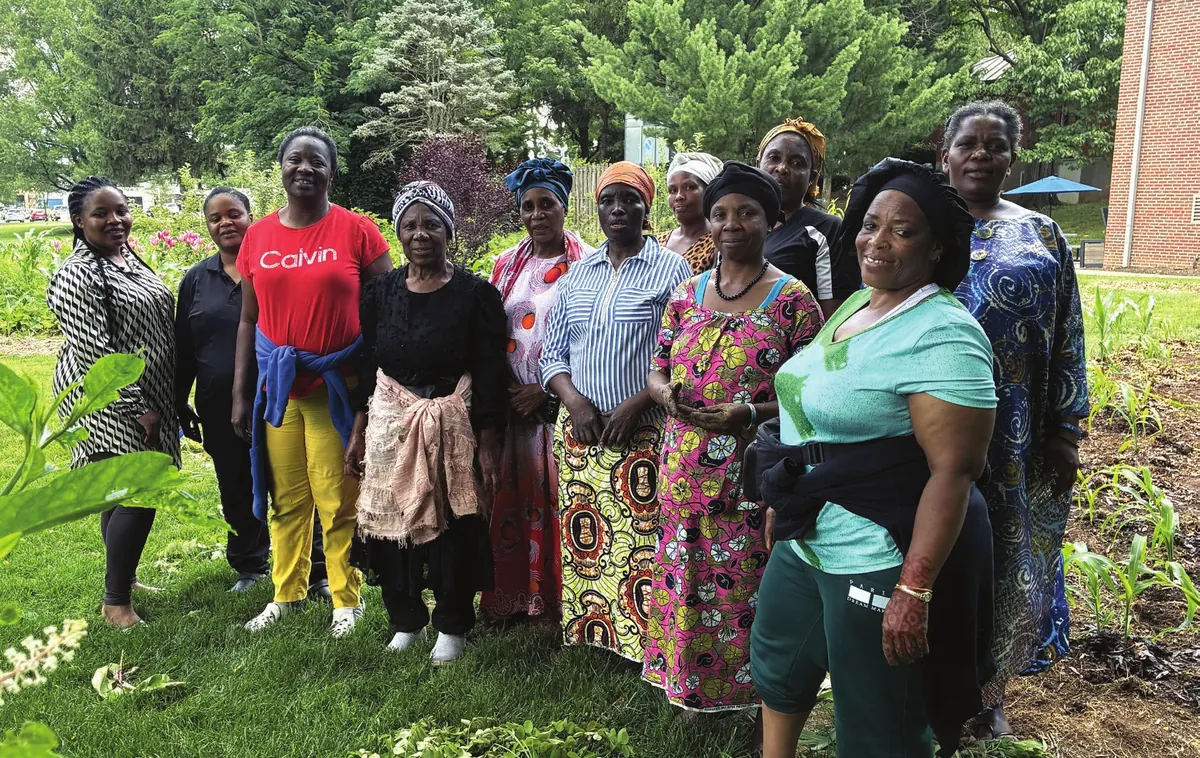
The women call it a Shamba. The word comes from Swahili and refers to a family garden or cultivated plot of land. Though this patch of earth sits in Lexington, Kentucky, it carries memories of homes thousands of miles away in the Democratic Republic of the Congo.
For the past months, Congolese refugee women have gathered at the Catholic Center to tend vegetables chosen from both Kentucky and Africa. They weed, water, harvest, and share what they know. The work is familiar. For many, farming and gardening have been part of life since childhood, learned alongside parents, grandparents, and neighbors. What makes this small garden remarkable is not only what grows here, but what happens when the women gather here.
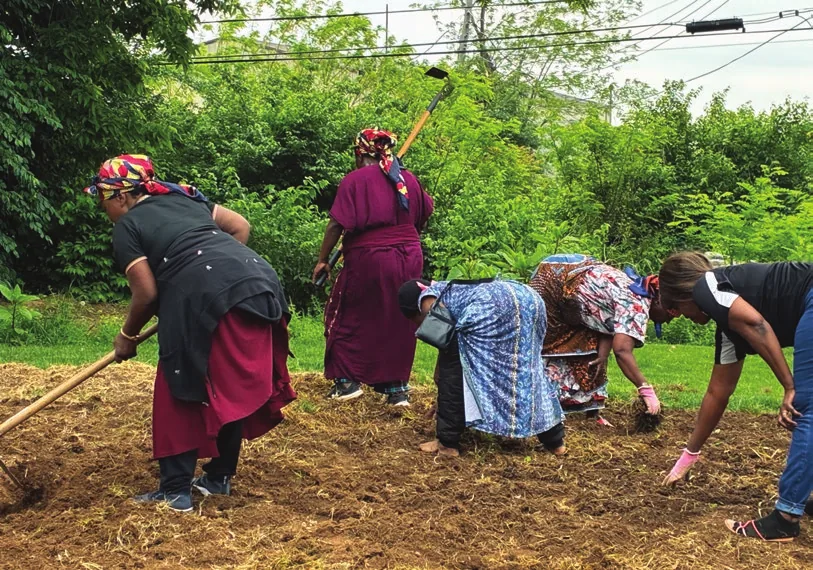
Through a partnership among Kentucky Refugee Ministries, the Diocese of Lexington, and Catholic Charities of Lexington’s Community Agriculture program, the Shamba has become a place of accompaniment — a place where women who have survived war, displacement, and profound loss now find friendship, purpose, and community. In the shared work of cultivating the earth, seeds of hope are taking root.
At Catholic Charities of Lexington, accompaniment is more than a principle; it is our mission. It means walking alongside another person, sharing burdens, offering support, and recognizing the dignity of every human being. In the Shamba, that accompaniment takes root through the shared work of cultivation, friendship, and community. The harvest may fill baskets, but the fruits of accompaniment reach much further.
To understand why the Shamba matters, it helps to understand something of the journey that brought these women to Kentucky. They come from the eastern Democratic Republic of the Congo, a region that has endured decades of armed conflict, violence, and instability. Many fled their homes with their families, carrying what they could, leaving behind the places where they once built their lives. For years, sometimes decades, they lived in refugee camps in neighboring countries, waiting for the possibility of resettlement.
Fewer than 1% of refugees worldwide are ever resettled into a third country. These women participating in the Shamba were identified by the United Nations as survivors of torture and persecution. Their presence in Kentucky reflects both extraordinary endurance and a rare opportunity for a new beginning. Arriving in Lexington, the families are now safe. But they face the quiet difficulty of starting again: learning a new language, navigating unfamiliar systems, finding work, starting school, and caring for their families in a place that is still new to them. It is into this reality that accompaniment becomes essential.
Kentucky Refugee Ministries (KRM) helps families navigate the practical challenges of resettlement, from securing housing and employment to accessing healthcare and education. Yet amid the demands of daily life, finding space to heal can be difficult. “When there is a major change, like coming to the United States, healing from trauma can fall away because the immediate needs are so urgent,” said a KRM staff member.
The Shamba offers something different. Gardening provides familiarity at a time when almost everything else is new. It requires little language, brings women together around a purpose and shared work, and offers a contrast to the constant demands of resettlement.
The Shamba is one of several gardens established through Catholic Charities of Lexington’s Community Agriculture program. Supported in part by a ,000 grant from CHI Saint Joseph Health, the program helps families and communities across Central and Eastern Kentucky. Within the Shamba, the women choose what they plant, selecting crops that reflect both Kentucky traditions and the foods of home. In a life where so many decisions have been made for them, even this small act of choosing carries meaning.
Shamba is a name that reflects a tradition of cultivation rooted in both family and community. It echoes the vision of Pope Francis in his encyclical Laudato Sí, which reminds us that care for creation and care for people are inseparable. Here, tending the soil also means nurturing relationships and strengthening community.
While the garden provides fresh produce for families, its impact reaches beyond food. Gardening promotes physical, emotional, and social well-being, creating opportunities for people to gather, share knowledge, and support one another. For many of the women, the work feels deeply familiar. While some grew up helping tend family plots in the Congo, others learned agricultural practices during their years in refugee camps.
Some crops are already being harvested, yet the women are already asking for more land to cultivate. They hope to grow additional food for their families and households. In a garden born from displacement, that desire to plant and nurture speaks to something deeper — it is a sign that new roots are taking hold.
Alongside the practical support offered through resettlement and community programs, faith remains an important source of strength for many Congolese families in Lexington. More than 1,300 Congolese refugees now call Central Kentucky home, and more than half are Catholic. For many, the Church has been a place of continuity across continents. One refugee woman still holds onto her baptismal and sacramental records, preserved through years of displacement. This is clearly more than documentation; it is a connection to her identity and faith.
That faith has found a home within the Diocese of Lexington. Congolese Catholics gather for Mass in Swahili at St. Peter Claver Parish, where they are welcomed into parish life and supported by clergy and community members. The Church has offered not only liturgy but belonging.
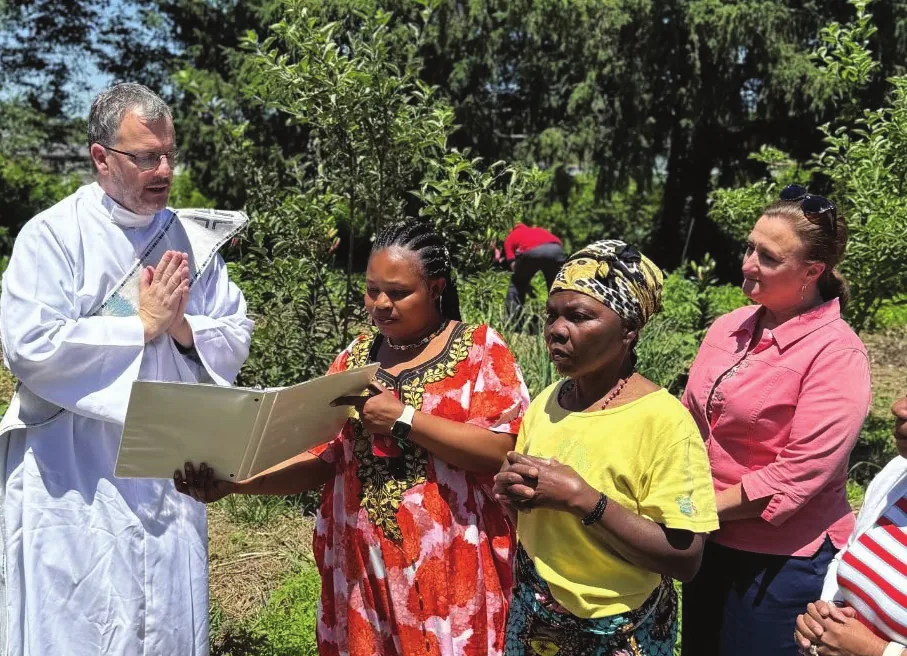
That sense of belonging extends even to the Shamba itself. After the garden was established, the women requested that it be blessed. In that moment, the garden became more than a place to grow food. It became a place of gratitude, community, and prayer.
In many ways, the Shamba reflects what accompaniment looks like in practice: walking with one another through hardship, creating space for dignity, and recognizing the presence of God in ordinary work.
Diane Gottfried is the Director of Development for Catholic Charities of Lexington. This cover story originally appeared in the July/August 2026 issue of Cross Roads.